Sport
World Cup finals: a tiny winners’ club, a growing taste for drama
Nearly a century of finals reveals a tiny winners’ club, more matches settled beyond normal time and a long pause in home glory.
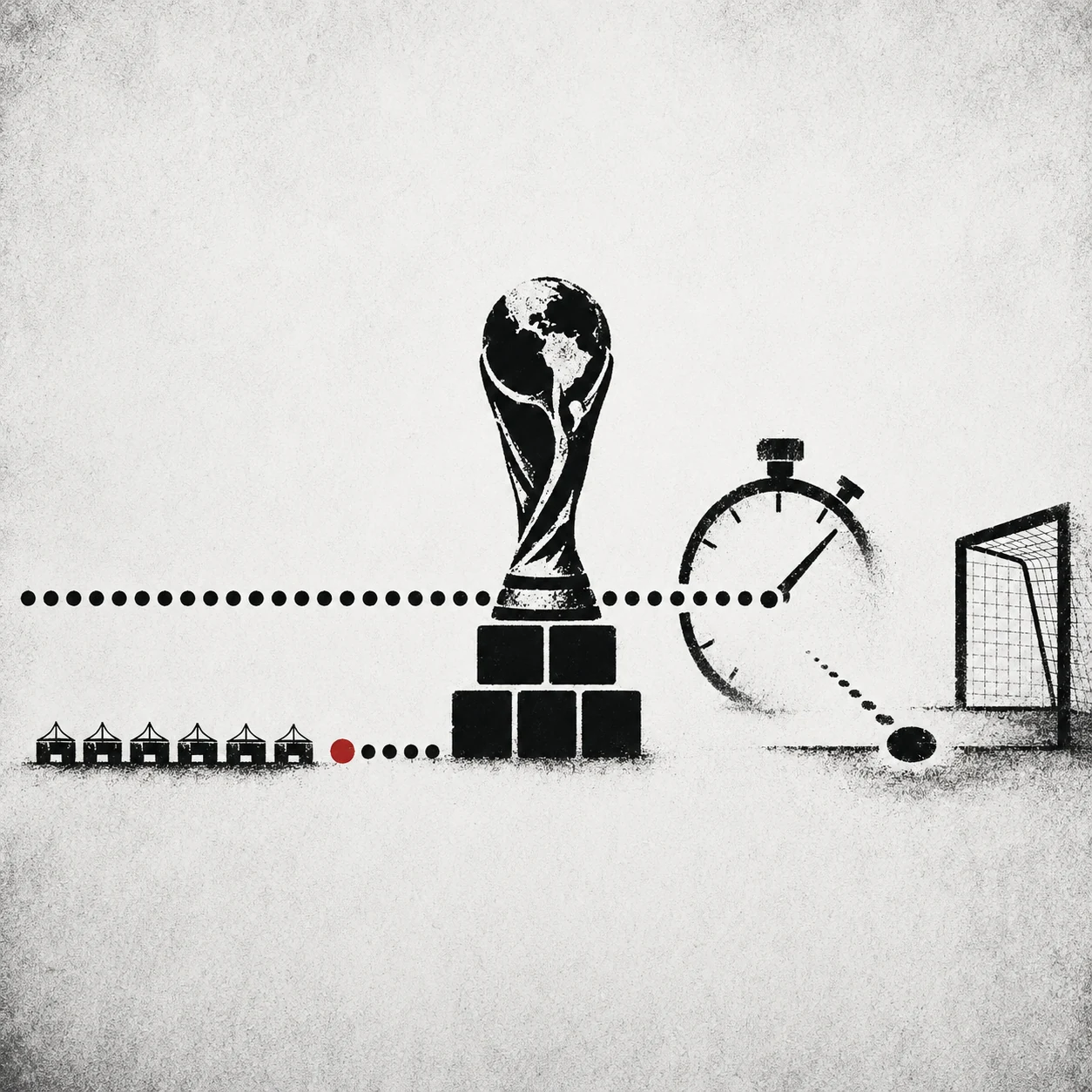
The World Cup feels huge because it is. More nations, more viewers, more noise and more history layered into every tournament. But strip it back to the final itself and a tighter three-chart story appears.
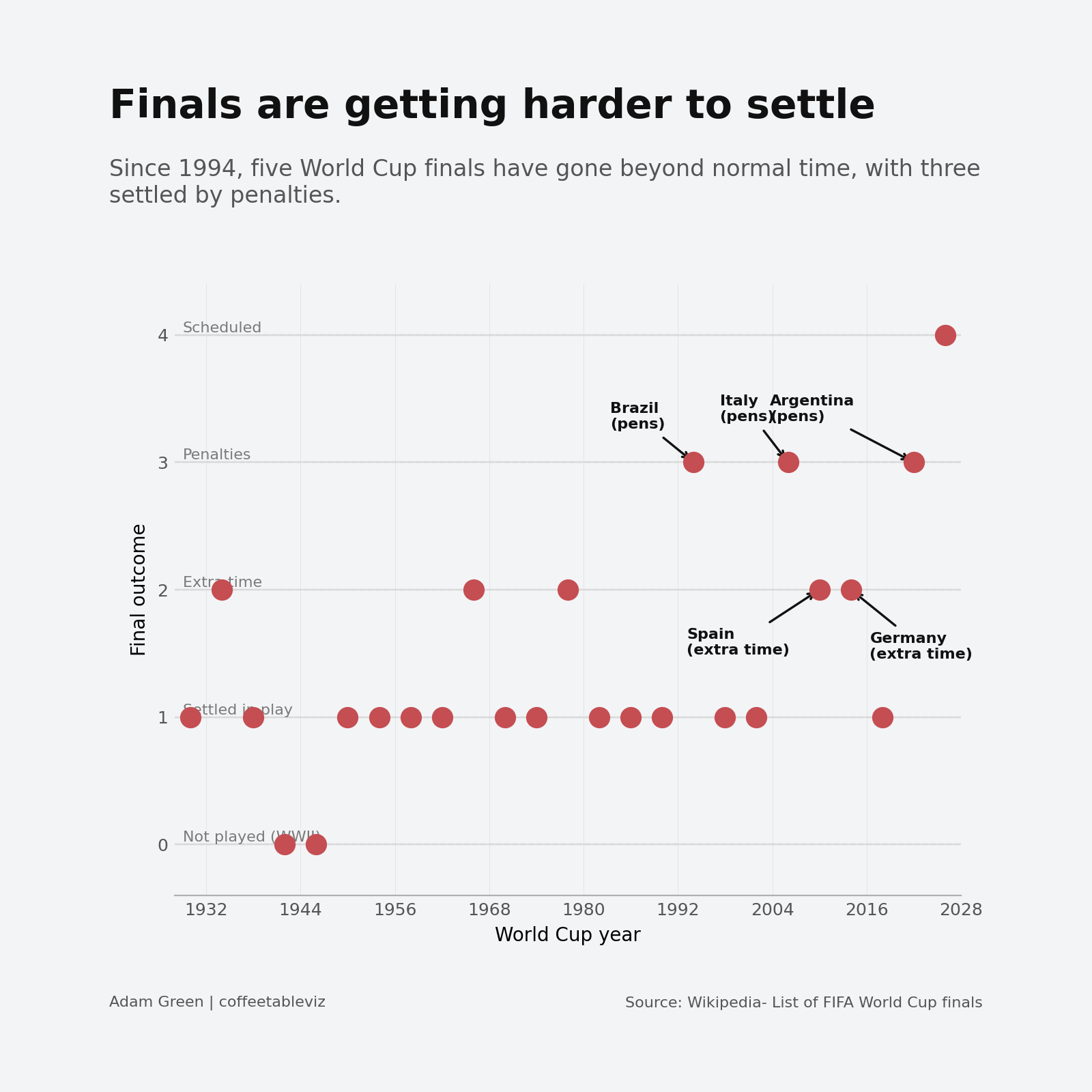
The trophy has only been lifted by a small group of countries. The final has also become harder to settle cleanly. Extra time and penalties are no longer rare footnotes; they are part of the modern final’s rhythm.
The winners’ club is still tiny
World Cup glory remains highly concentrated. Plenty of countries have reached finals. Far fewer have won them.
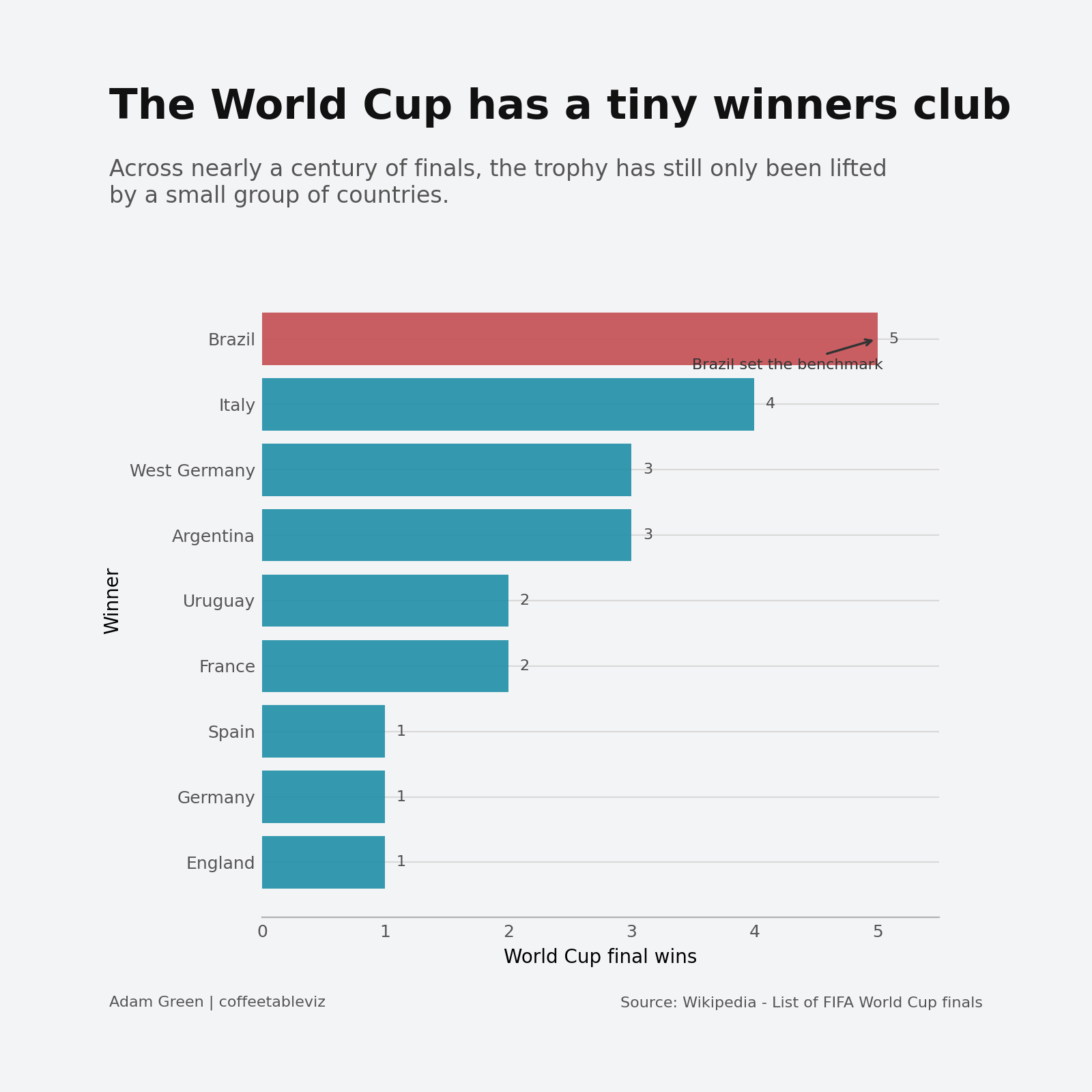
Brazil remain the benchmark with five final wins. Italy sit close behind, while Argentina, France, Uruguay, England, Spain, Germany and West Germany make up the rest of this small winners’ club.
Modern finals are harder to settle
Since 1994, five World Cup finals have gone beyond normal time, with three settled by penalties.
Home glory has gone quiet
Home advantage produced memorable winners: Uruguay in 1930, Italy in 1934, England in 1966, West Germany in 1974, Argentina in 1978 and France in 1998.
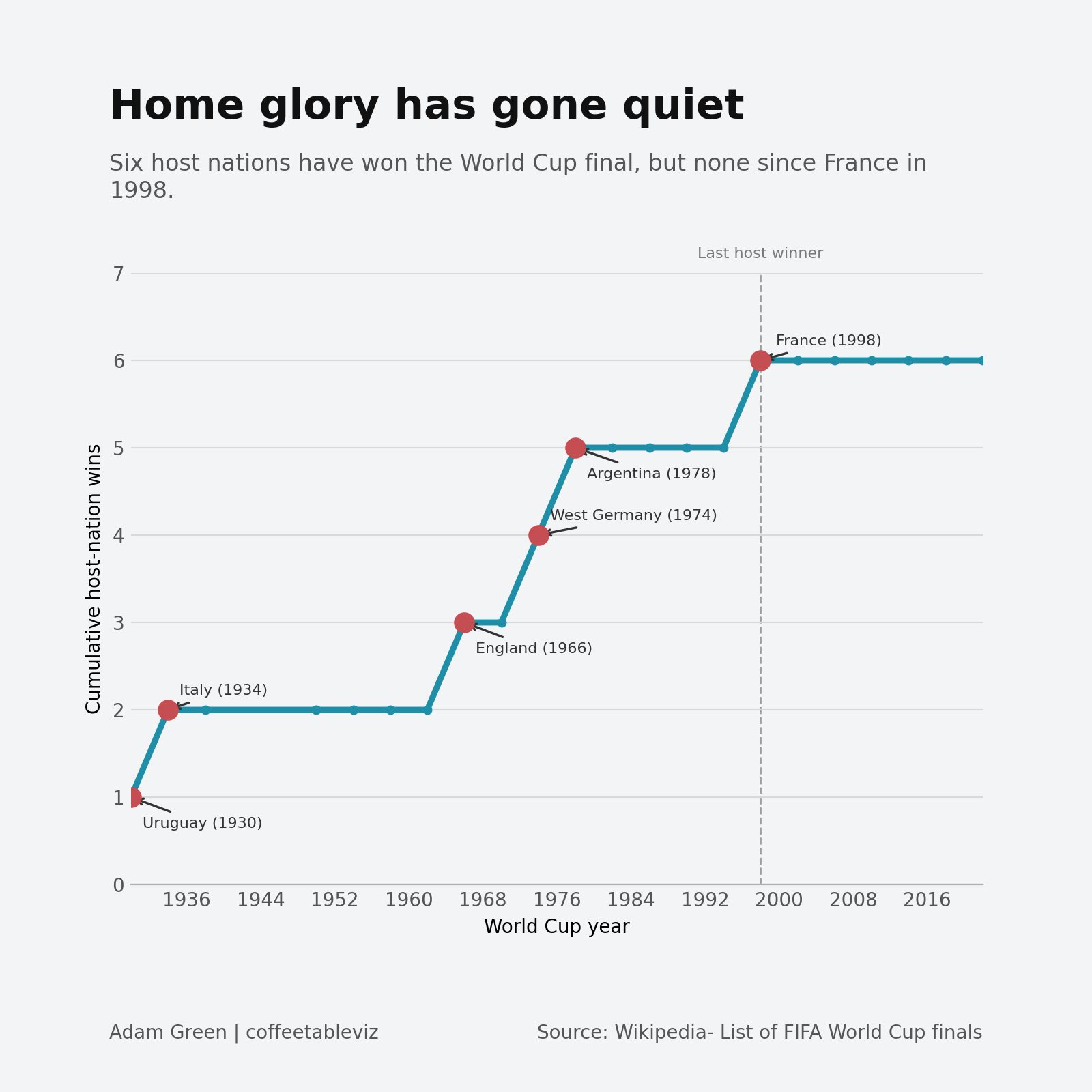
That flat line after 1998 is doing a lot of work. The World Cup has grown bigger, more global and more complex, but the classic host-nation triumph has gone quiet.
TLDR
The winners’ club is small, modern finals are increasingly difficult to settle in normal time, and home glory has become rare. The World Cup may feel wide open every four years, but history says the final usually belongs to a very select few.
simple charts clear stories.
First published on the original coffeetableviz WordPress site.