Culture
The wee dram, a small sip with lingering notes
From Speyside sweetness to Islay smoke, this data-driven flavour map of 86 Scotch distilleries reveals just how different Scotland’s whisky regions really are.
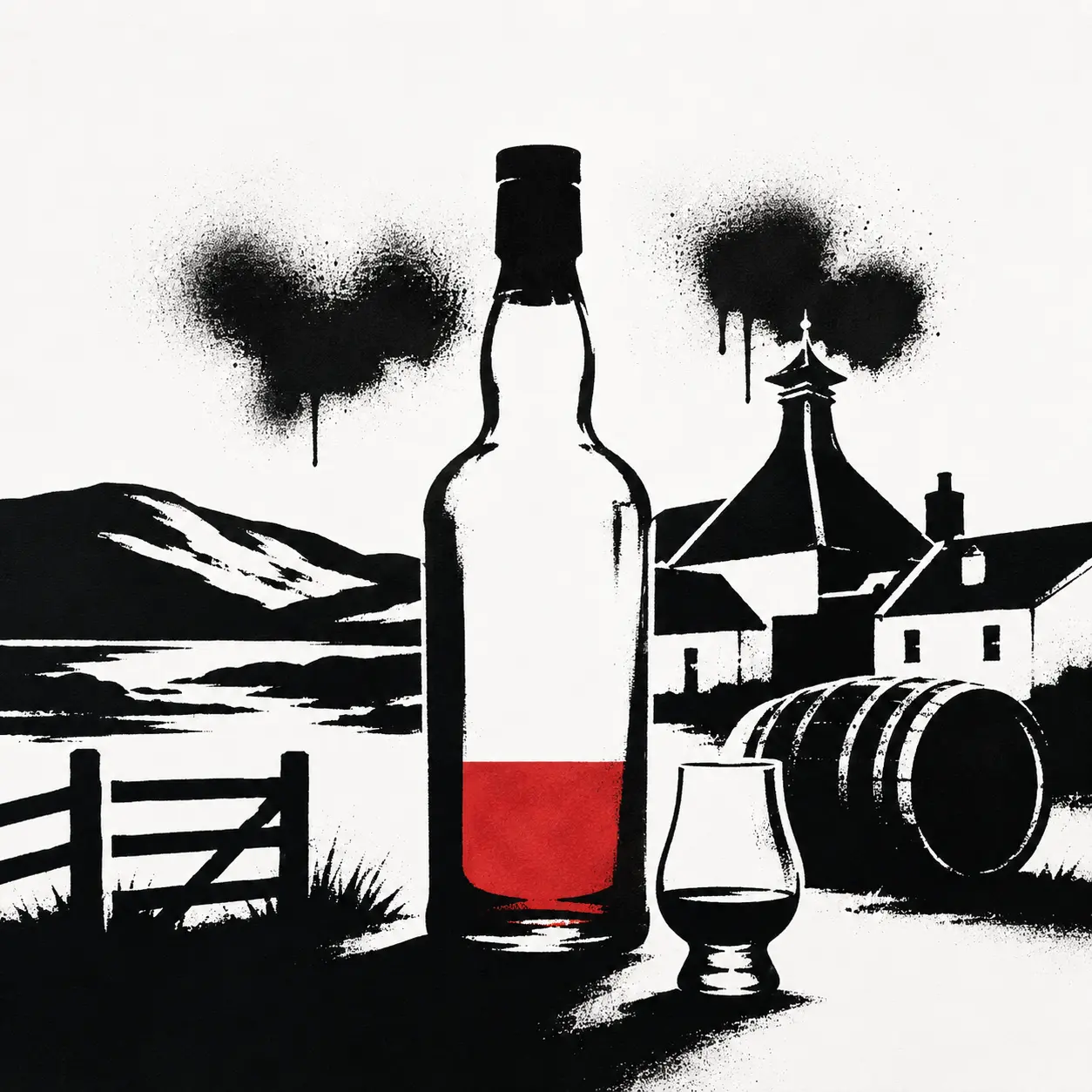
I’ve never really been a fan of heavily smoky and peaty whisky.
For years, mention Scotch and I immediately thought of medicinal, smoky drams that taste like bonfires and sea spray 🥴🤢. Turns out that may have just been my dads drinks cupboard!
After a few well organised whisky tasting sessions with my bro, we started digging into the flavours we liked and the distilleries behind them. I realised that stereotype only tells a very small part of 🏴’s story, along with the discovery that I sit on the polar opposite spectrum to my brothers taste preferences.
This post attempts to visually map what else Scotland’s whisky regions have to offer, a more informed trip to the supermarket and that kid in a sweet shop trip to the bar on a Saturday session 🍭
How the flavour maps work
The charts in this post use flavour scores from the Kaggle Scotch Whisky Flavour Dataset Covering over 80 distilleries across Scotlands six whisky regions. The dataset rates distilleries across flavour dimensions like sweetness, fruitiness, smokiness and medicinal intensity.
To simplify things, I combined those flavours into two custom indexes:
- The 👎🏻(i don’t t like it) Peat index = Smoky + Medicinal
- And the 👍🏻(I like it) Approachable index = Sweetness + Fruity + Honey
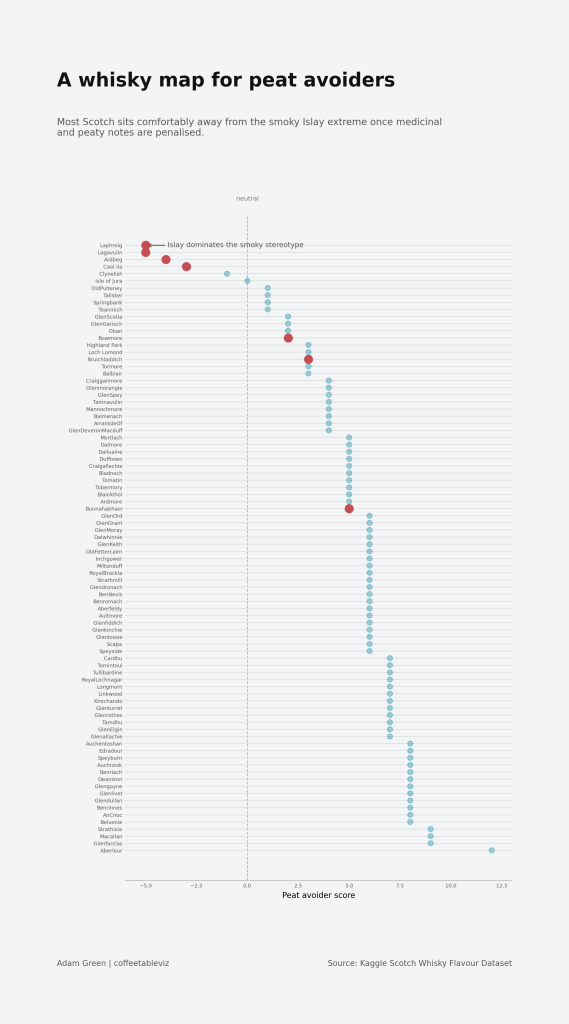
I also created a simple “peat avoider score”, which rewards sweeter and fruitier whiskies while penalising smoky and medicinal flavours. It’s not meant to be scientific, just a useful way to visualise which distilleries sit furthest from the classic peat-heavy stereotype.
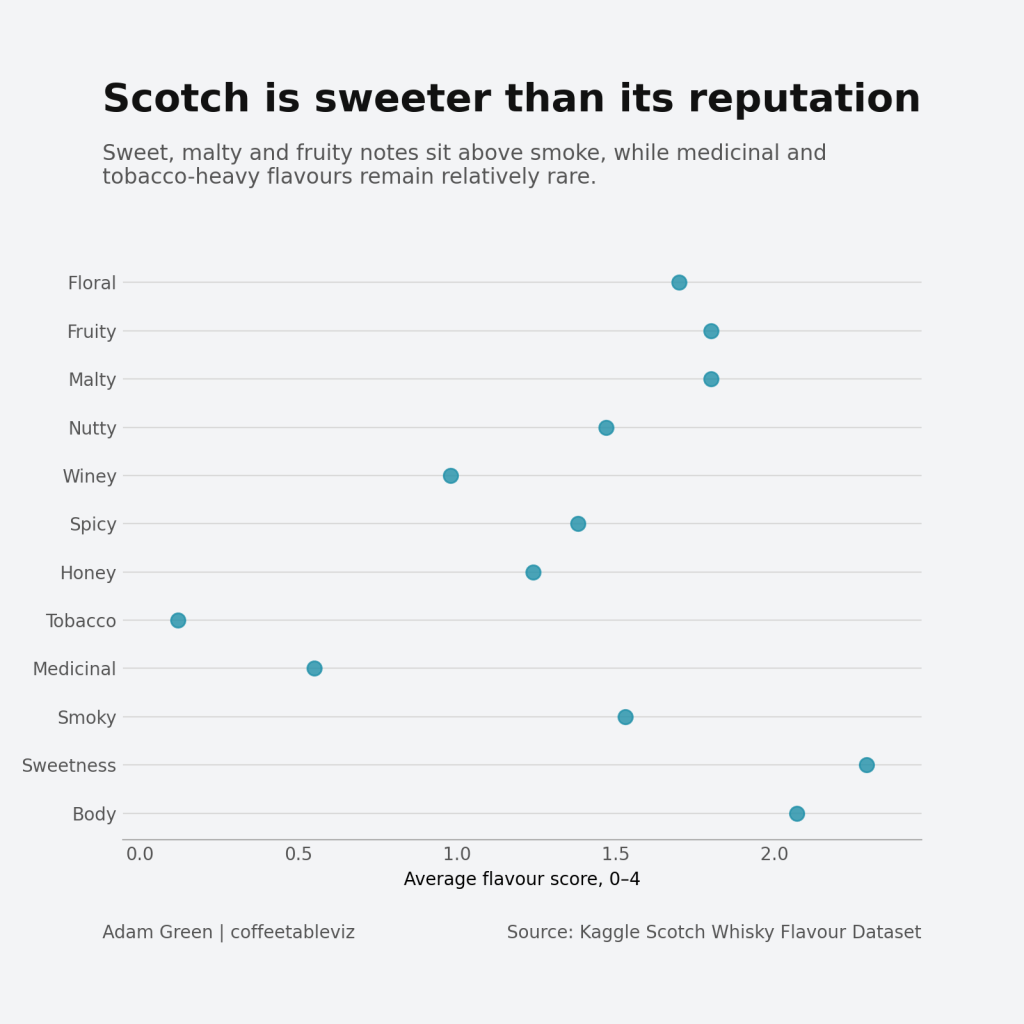
Scotch is sweeter than its reputation
Across Scotland as a whole, sweet, fruity and honeyed notes appear far more often than extreme smoky flavours.
Whilst stereotype exists, the average Scotch profile actually sits much closer to approachable than overpowering.
Peat is whisky’s loud minority
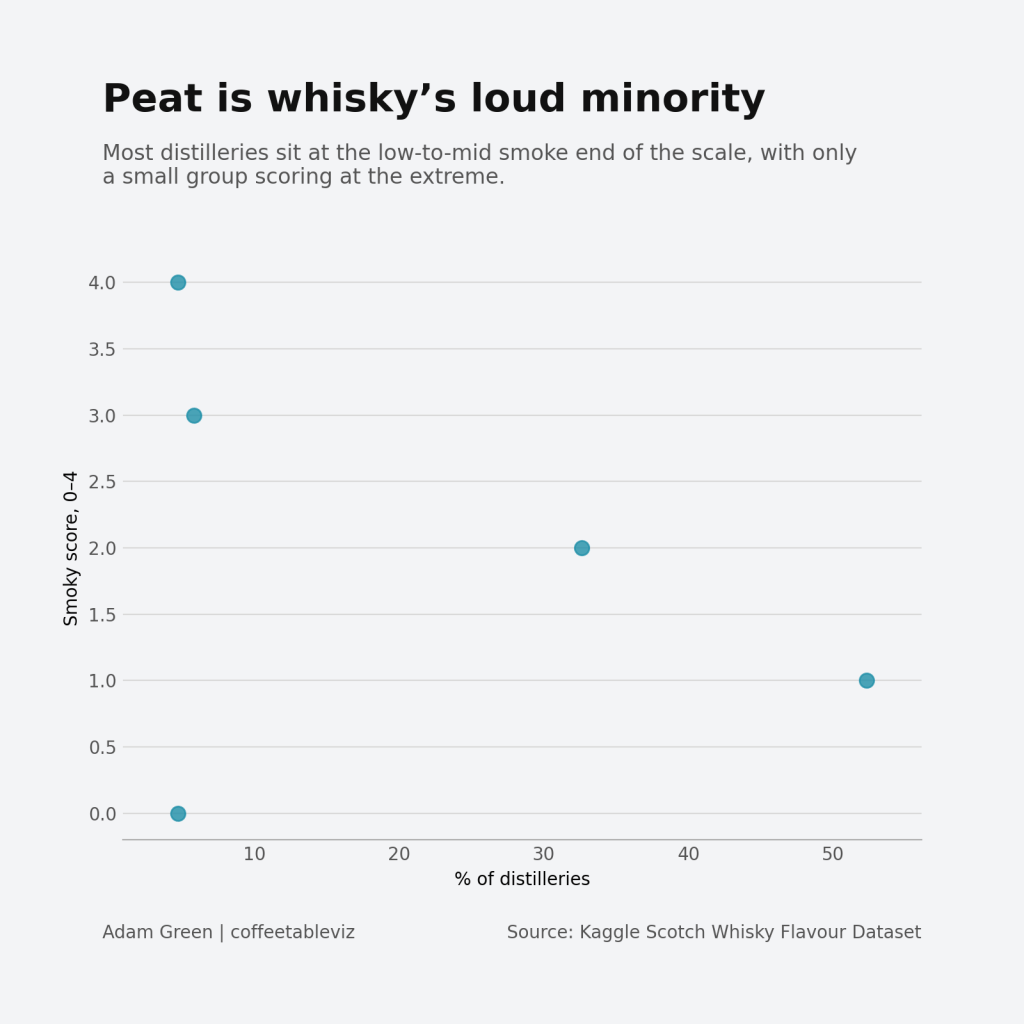
Smoke dominates whisky conversations because it’s memorable, distinctive and polarising. But in the flavour data, peat-heavy whiskies are actually a minority rather than the norm.
Most Scotch distilleries sit well away from the extreme smoky corner occupied by brands like Ardbeg, Laphroaig and Lagavulin.
Islay is the outlier, not the standard
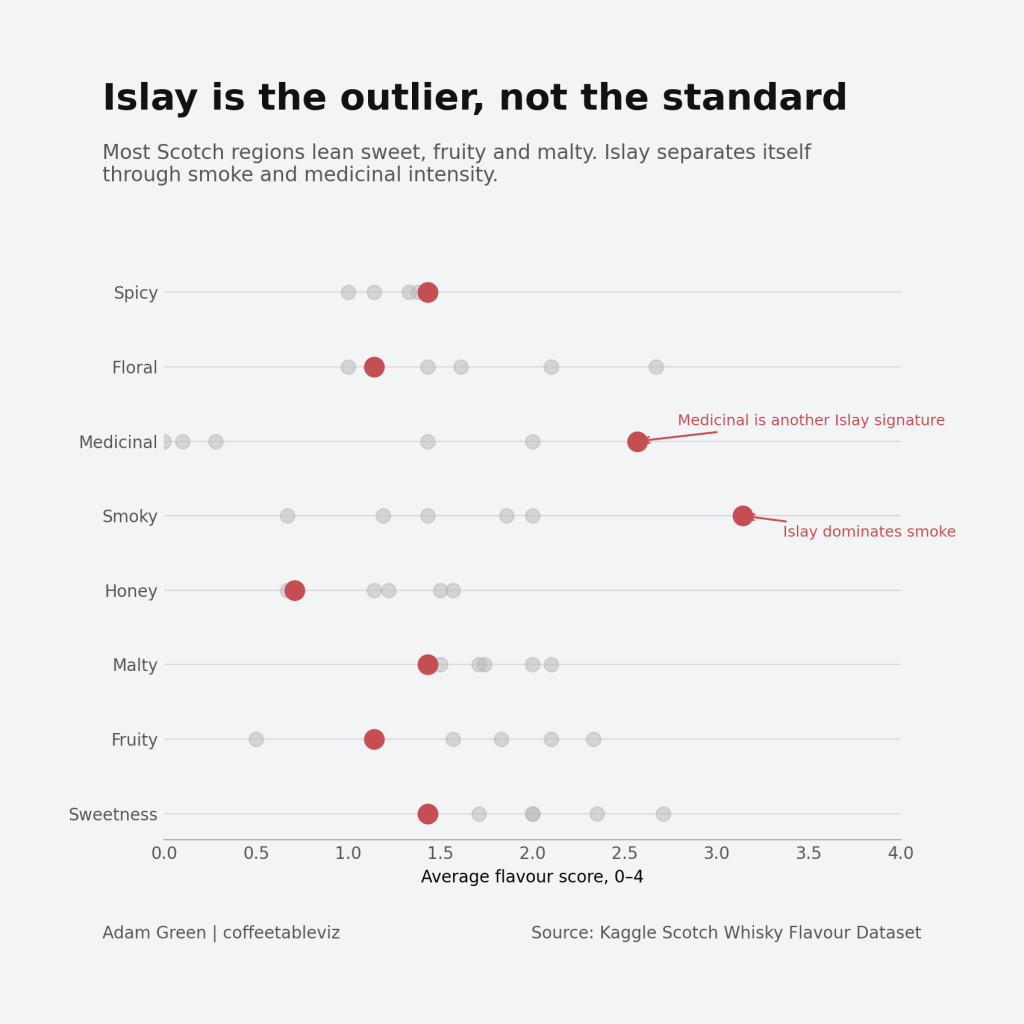
Once you split Scotland into regions, the story becomes much clearer.
Islay really does sit in its own smoky and medicinal corner of the map, driven by distilleries like Laphroaig, Ardbeg, Lagavulin and Caol Ila.
But that’s exactly the point: Islay is unusual.
It’s probably the loudest regional flavour profile in Scotch, but it’s far from representative of Scotland overall.
A whisky map for peat avoiders
For someone like me who prefers sweeter and fruitier whisky styles, the regional flavour maps become surprisingly useful.
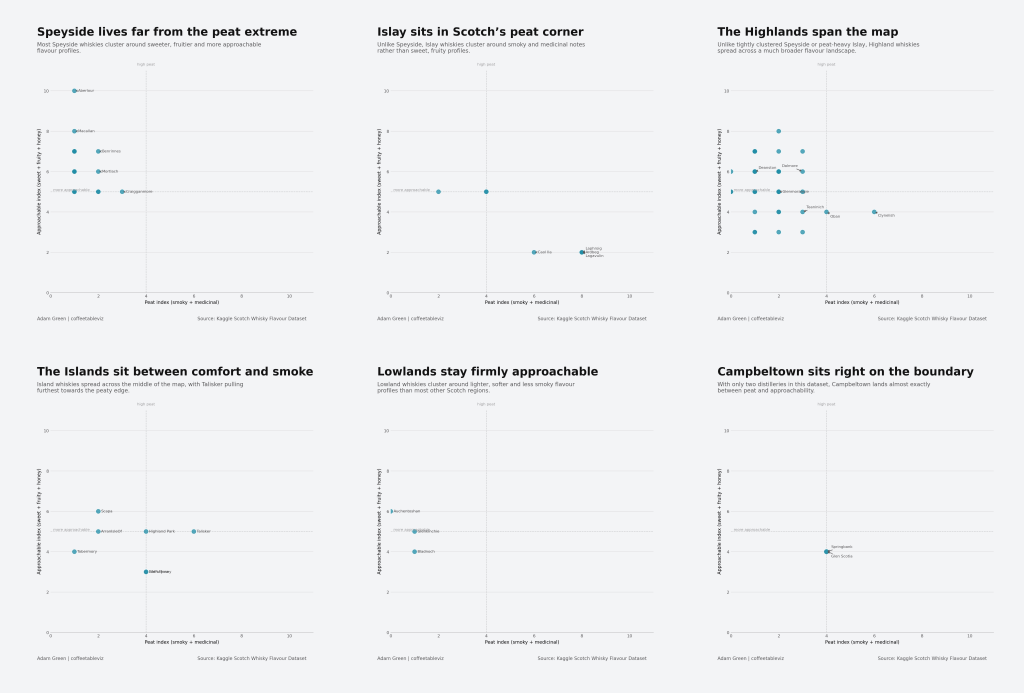
Speyside — home to names like Macallan, Glenfiddich, Aberlour and Balvenie — clusters heavily around approachable profiles.
The Highlands cover almost the entire flavour spectrum, with distilleries like Dalmore, Oban and Glenmorangie stretching across the map.
The Islands sit somewhere in the middle with Talisker and Highland Park balancing smoke with sweeter notes, while Lowlands remain consistently lighter and softer with distilleries like Auchentoshan and Glenkinchie.
Even tiny Campbeltown lands almost exactly on the boundary between peat and approachability through Springbank and Glen Scotia.
Instead of treating Scotch as one category, the regional maps start to behave more like a flavour guide.
Scotland’s whisky regions tell very different stories
Viewed together, the six regional maps completely change the picture.
Rather than one national flavour identity, Scotland looks more like a collection of regional flavour ecosystems — each with its own balance between sweetness, fruit, smoke and medicinal intensity.
And for peat avoiders like me, that’s actually great news.
👋🏻
TL;DR
Scotch whisky’s smoky reputation is largely driven by a small number of peat-heavy Islay distilleries. But flavour data from 86 Scottish distilleries shows most Scotch actually leans sweeter, fruitier and more approachable. By mapping Scotland’s whisky regions, a much broader flavour landscape emerges — from Speyside sweetness to Highland diversity and Island balance — proving peat is whisky’s loud minority, not its default flavour.
Adam
#coffeetableviz – simple charts, clear stories.🥃
Source: Kaggle Scotch Whisky Flavour Dataset. Visuals created in Python and Matplotlib.
additional dataset pivots which regions added
First published on the original coffeetableviz WordPress site.