Sport
Forbes’ most valuable sports teams
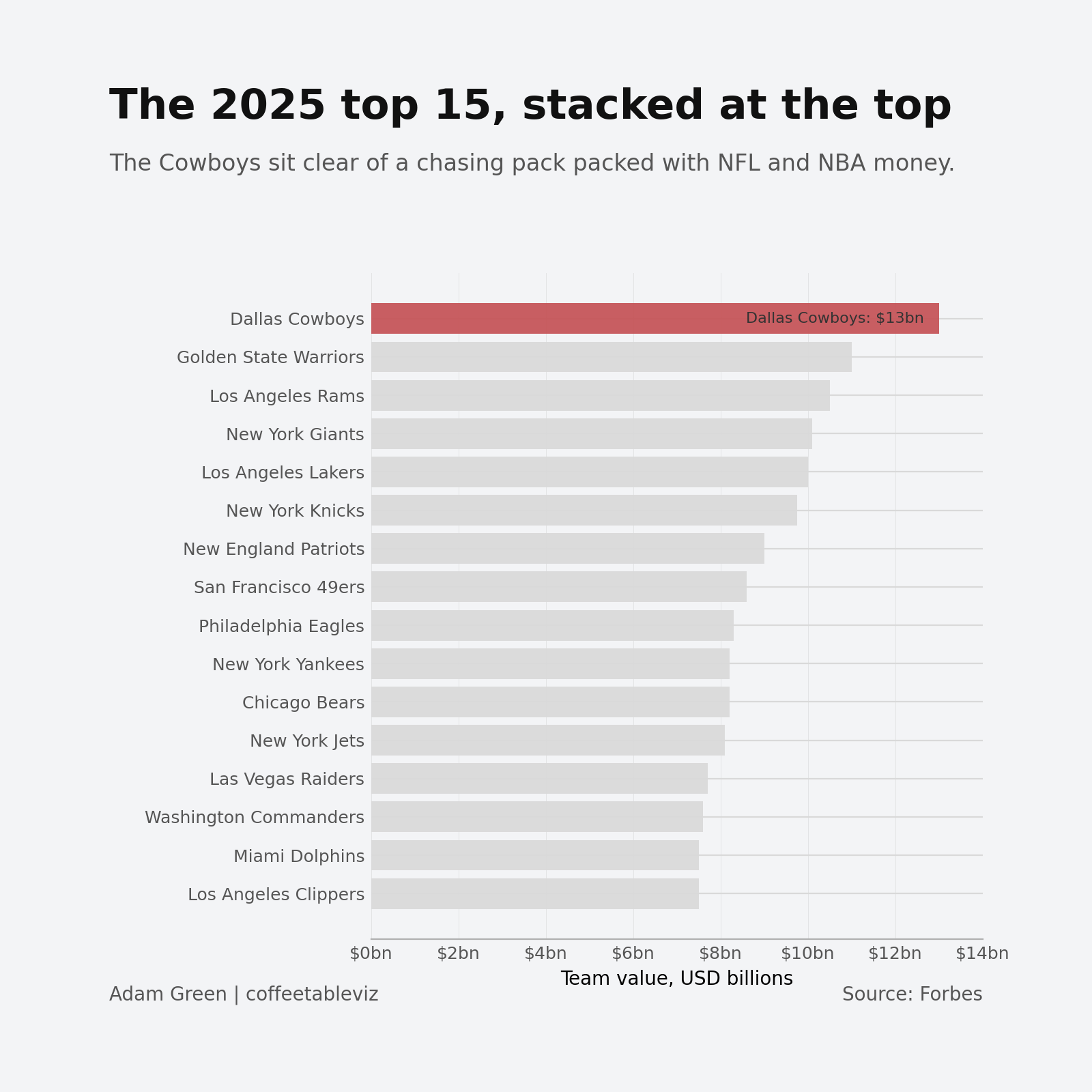
We all know the Cowboys are big. But this isn’t really a story about one team – it’s a story about how sport itself is valued. According to Forbes, 60% of the world’s most valuable teams are NFL franchises. Rankings are fairly static…
This post comes off the back of a dinner table debate with my boy: which global sports team is actually the biggest in the world?
As a huge basketball fan and full-on Stephen Curry worshipper 🛐, he was convinced the Golden State Warriors would be top of the pile.
Turns out… not quite.
According to Forbes’ 2025 valuations, the Dallas Cowboys sit comfortably at the top, and by some margin. The Warriors? Still right up there… just not number one.
We know the Cowboys are big. But is this the only story in this dataset?
At first glance, this looks like a story about the #1 ranked Dallas Cowboys – valued at a stratospheric $13 Billion 😳 in the 2025 Forbes most valuable sports team rankings.
They’re the most valuable* (equity plus net debt – full definition at the bottom) team in the world. Again (#1 since 2016) thanks to unparalleled revenue generation, massive commercial sponsorship, and the ownership of the AT&T stadium. Under Jerry Jones they function as THE premier business entity despite not winning the super bowel since 1996.
But once you start digging into the data, the story is much richer than first thought!
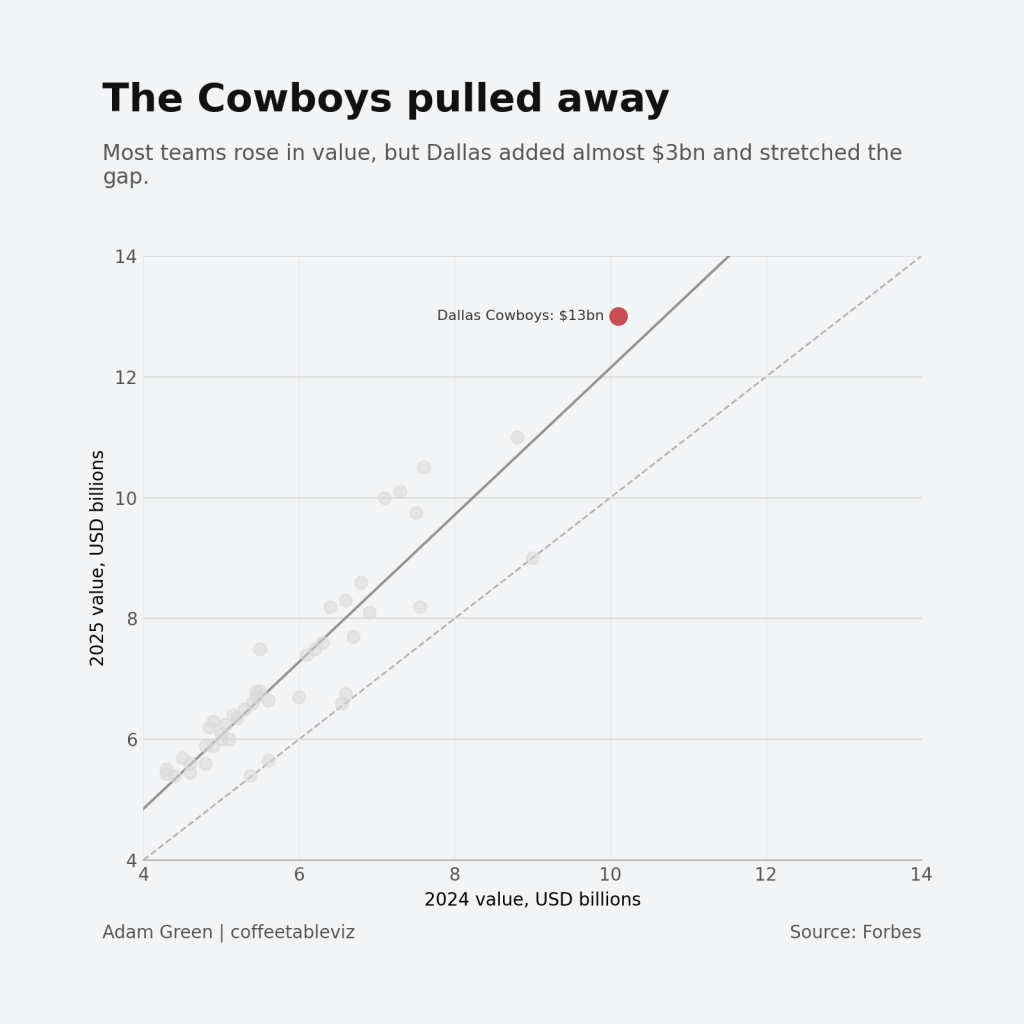
Yes, everyone’s going up. But Dallas isn’t just rising with the tide – they’re pulling away from it.
Zooming out…
It’s not about the Cowboys anymore.
It’s about the NFL.
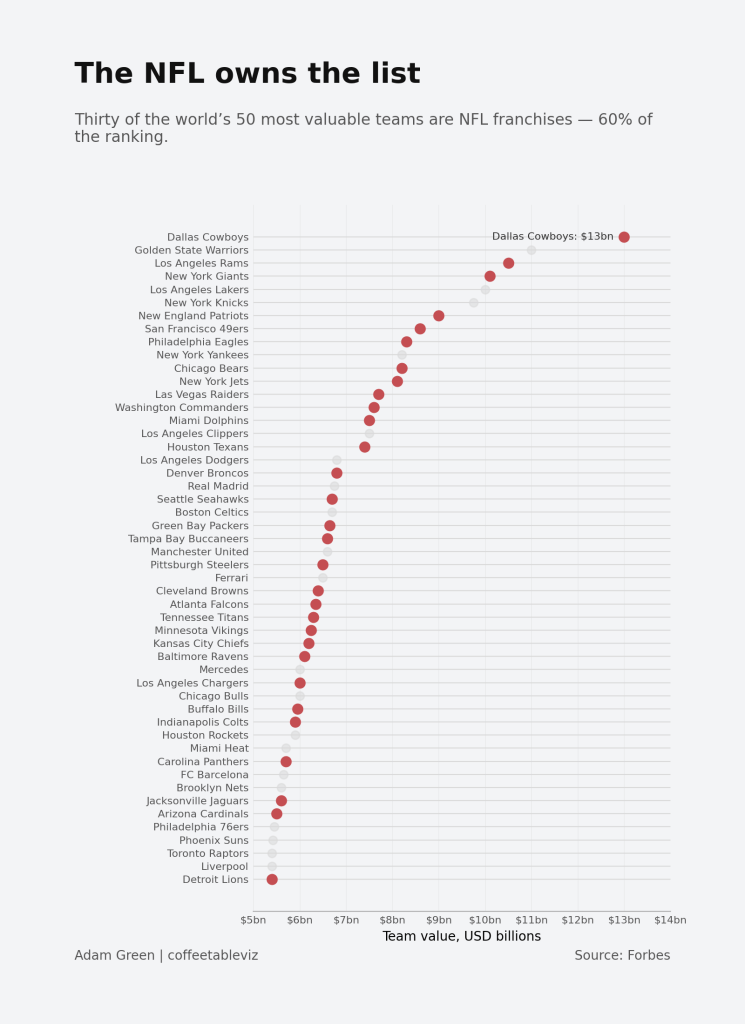
Thirty of the top 50 teams are NFL franchises. NFL dominate the Forbes sport team rankings. This isn’t really a global leaderboard, it’s an NFL list with a few guests (baseball, basketball, motorsport and proper football).
So… does anything actually change?
If values are rising across the board (Cowboys v’s the field) you’d expect a bit of re shuffling each year, however with the exception of a few teams rising or falling plus or minus ten places, the key story is football ⚽️ scoring a bit of a home goal 🥅 with Manchester, Liverpool and Barcelona all dropping ten or more places.
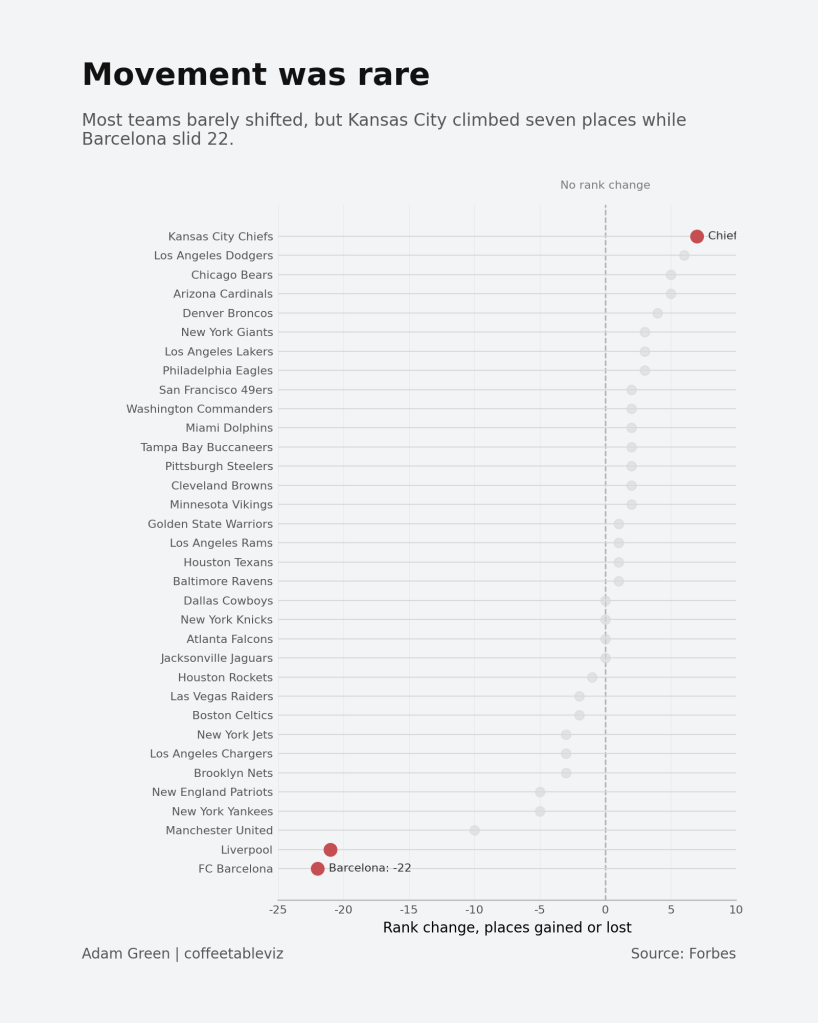
Given the structure is fairly fixed once you’re in position, you tend to stay there. Which makes these few big movers stand out even more.
Here’s where it gets interesting
Because rankings didn’t change much… I looked at one year $ value growth. These values definitely do…
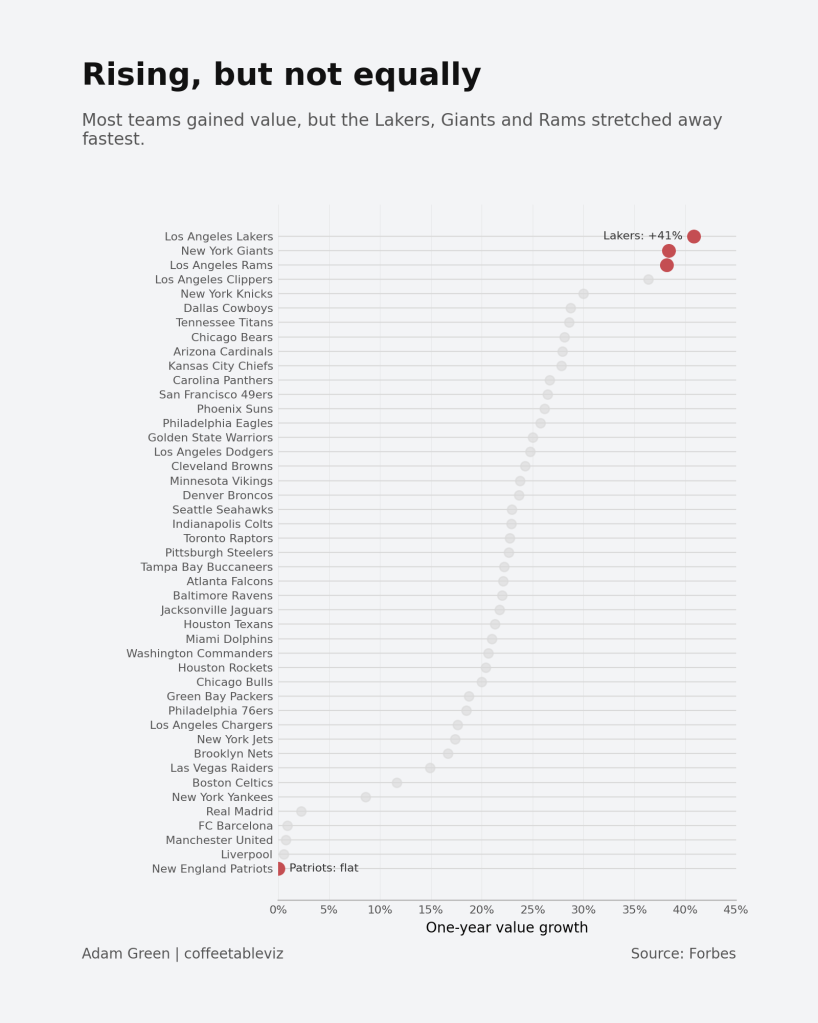
Almost everyone is going up. But some teams are accelerating, stretching the gap at the top, while others are just ticking along, which explains footballs ⚽️ home goal 🥅 story of relative stasis and NFL’s 🏈 accelerated growth 📈.
So the tide is rising… but it’s also pulling things further apart.
Shape of the Forbes top 50
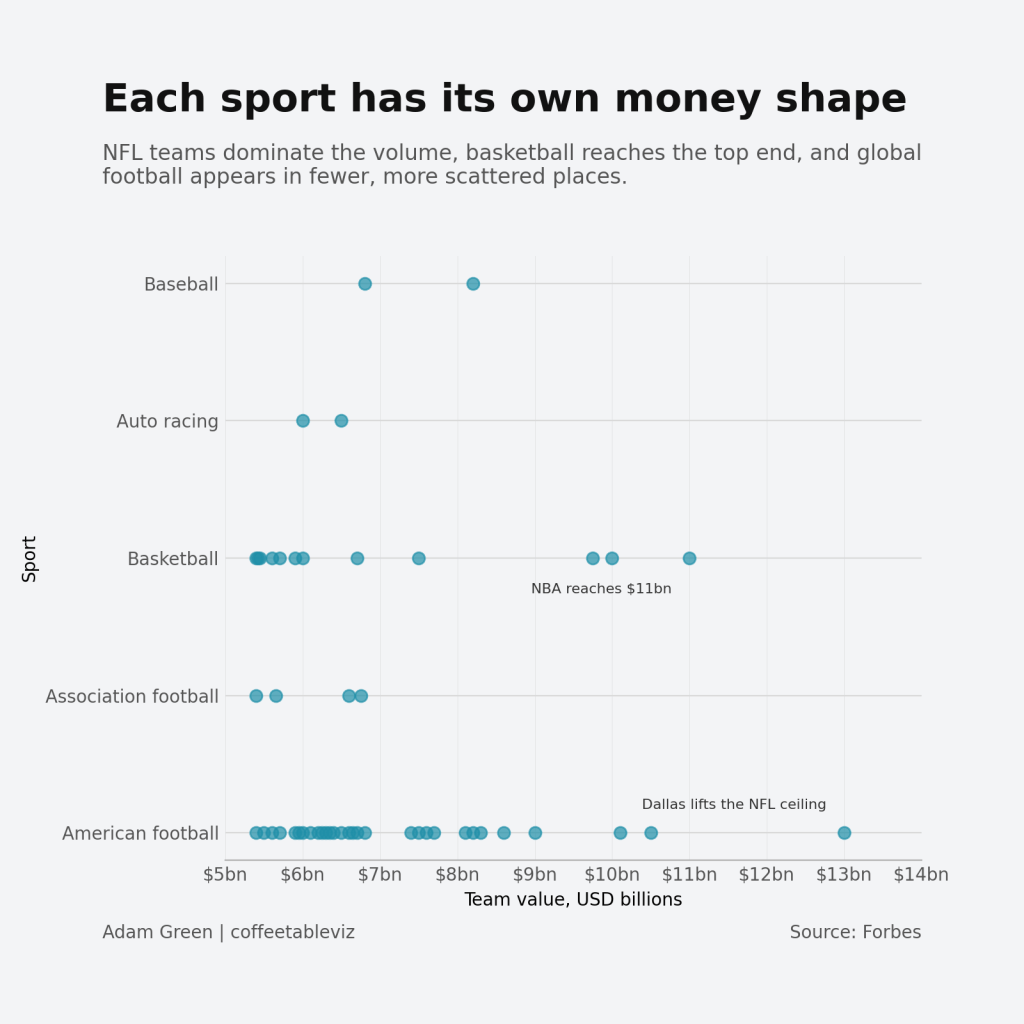
Whilst some teams compete on the same pitch, they operate in completely different economic systems.
The NFL delivers consistency and scale. The NBA reaches the highest peaks. Global football appears more sporadically, and less predictably .
Different sports. Different models. Different outcomes.
TL;DR
- The Cowboys aren’t just #1 — they’re pulling away
- The NFL dominates the economics of sport
- Rank movement is rare → the hierarchy is sticky
- Growth is widespread, but uneven
- Different sports behave in fundamentally different ways
👋🏻
Adam
#coffeetableviz – simple charts, clear stories.
Inspired by – Voronoi 2024 the worlds most valuable sports teams
Reference Article – Forbes worlds most valuable sports teams
Data source –
*Forbes definition (Valuable)
includes the economics of each team’s stadium—such as revenue from concerts and non-sporting events—but excludes the value of the actual stadium real estate. These annual valuations are driven by factors like media rights, sponsorship, and merchandise.
Key Aspects of Forbes’ Valuation Methodology:
- Enterprise Value: Forbes defines value as the total worth of the team, including equity plus net debt.
- Stadium Economics: Valuations incorporate the revenue generated by the team’s stadium, including concerts and other non-sports events that go to the team’s owner, but not the value of the real estate itself.
- Revenue Streams: Key components include media rights (broadcast deals), sponsorship deals, and merchandise sales.
- Growth Drivers: Recent rankings have been dominated by NFL and NBA teams, largely driven by massive U.S. media deals and brand power.
- Team vs. Individual Focus: While soccer clubs like Real Madrid and Manchester United appear, U.S.-based leagues (NFL, NBA, MLB) frequently dominate the top 50 list due to higher franchise revenue sharing and developed commercial operations.
First published on the original coffeetableviz WordPress site.