Environment
The UK’s rapeseed rollercoaster
A long rise, a clear peak, and a wobble back down…
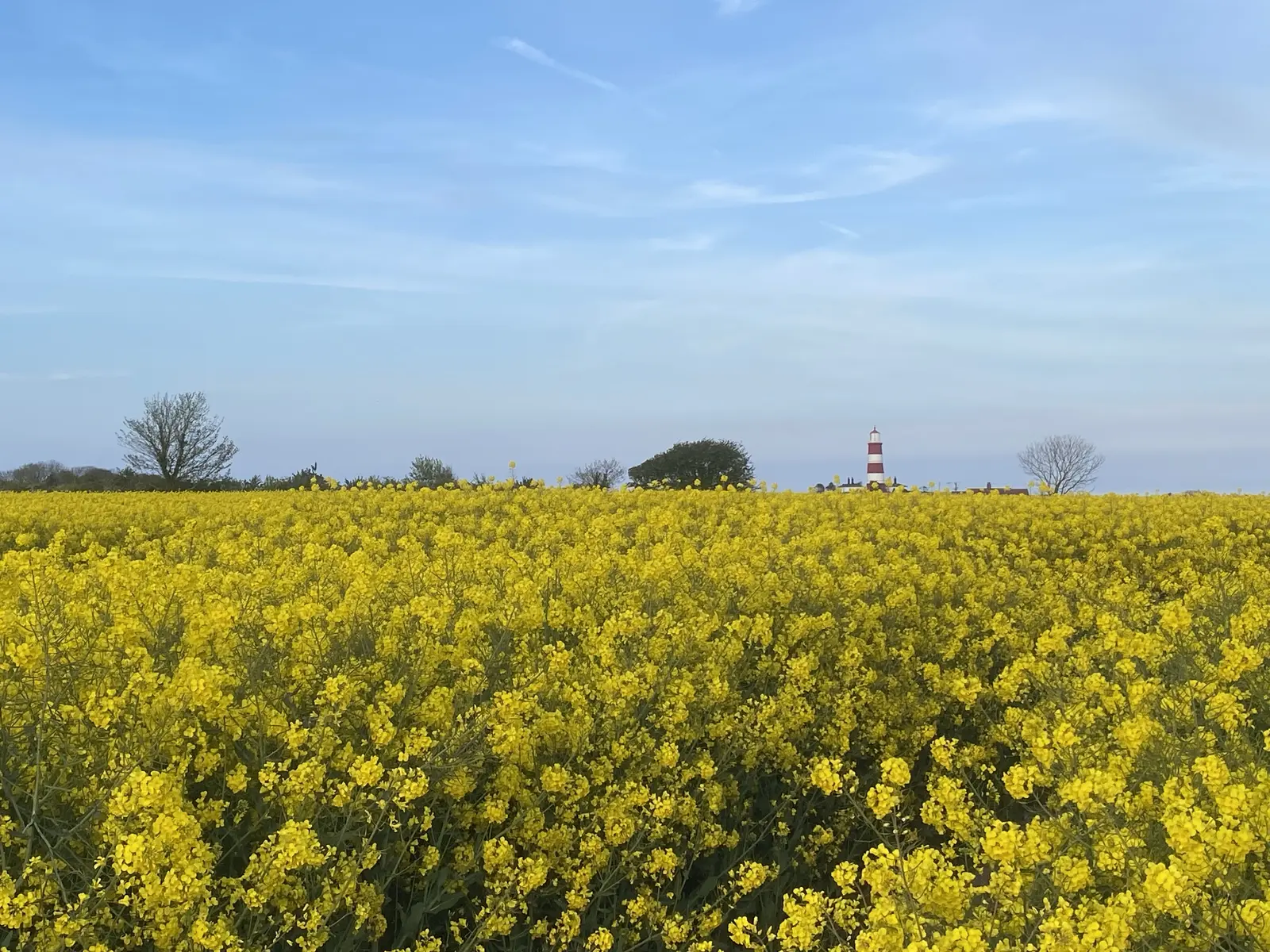
Another quick sofa scroll, this visual and data story is prompted by an evening stroll (with Jeff the 🌭🐾) around the fields in beautiful Happisburgh (Norfolk, UK).
Whilst my own personal experience (and 🤧) enjoys an Apr carpeted in yellow for yet another year, the data shows A rise, a peak, and a wobble back down.
The UK’s rapeseed boom peaked early
UK rapeseed production climbed for decades. Then it peaked.
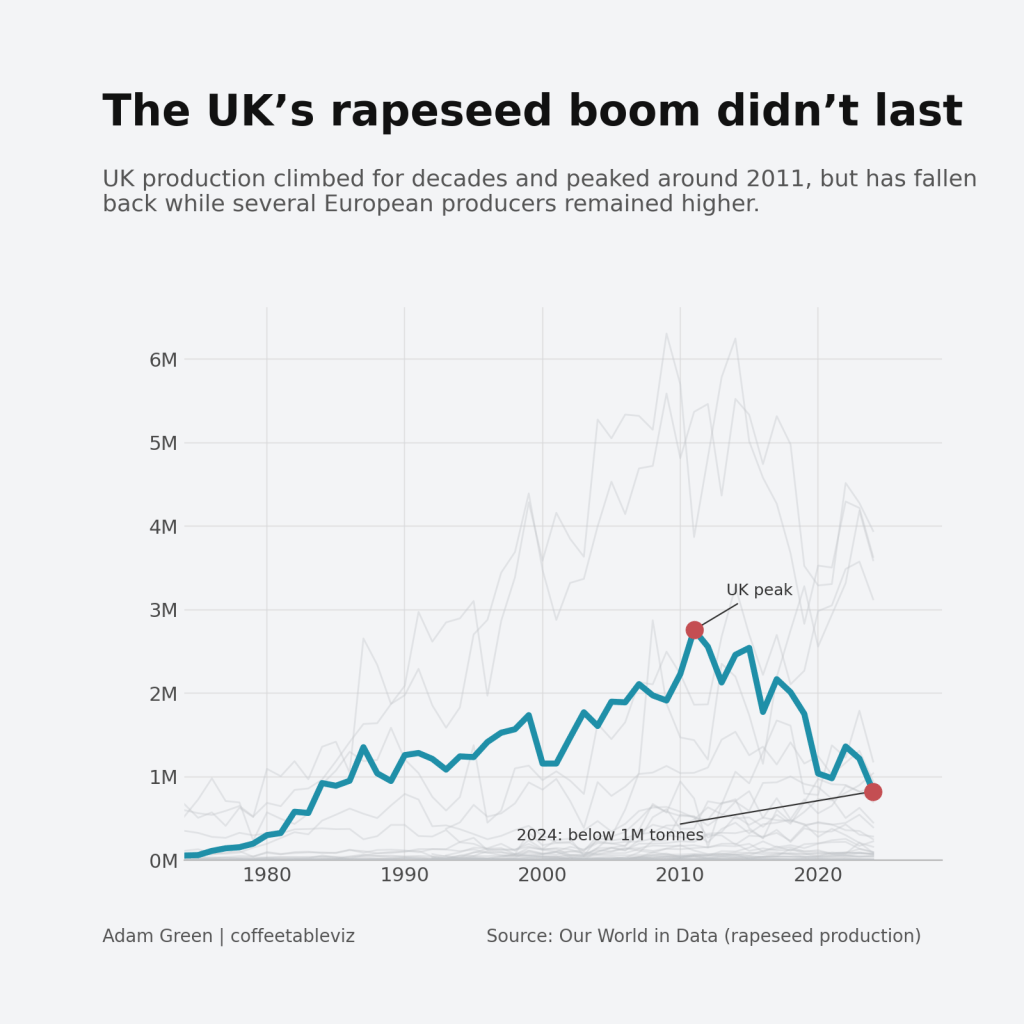
Since around 2011, the direction has flipped. While parts of Europe stayed higher, the UK drifted back.
And the drop came in swings
Zooming in, the decline hasn’t been steady.
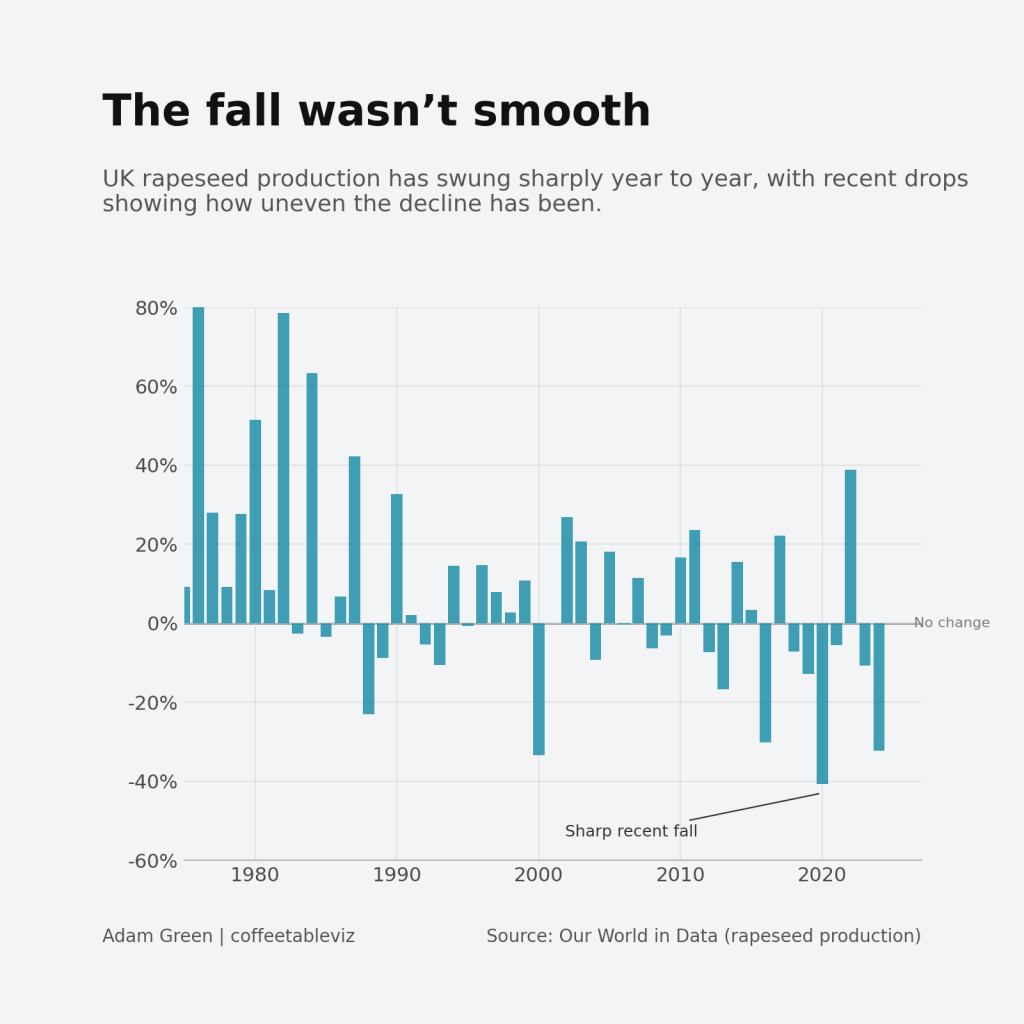
Big swings year to year. And some sharp recent drops.
So what’s driving the swings?
A mix of weather, pests, and incentives. Rapeseed is sensitive to conditions — wet autumns and dry springs have hit UK yields (AHDB). Pest pressure has also risen since neonicotinoid restrictions, with cabbage stem flea beetle a growing problem (DEFRA). Layer in shifting farm incentives post-CAP and Brexit, and it’s become a crop that’s harder to grow consistently.
👋🏻
Adam

#coffeetableviz — simple charts, clear stories.
Sources:
Want my full dataset? Download it here.
Our World in Data raw dataset: rapeseed production, FAOSTAT), part of the following publication: Hannah Ritchie, Pablo Rosado, and Max Roser (2023) – “Agricultural Production”. Data adapted from Food and Agriculture Organization of the United Nations. Retrieved from https://archive.ourworldindata.org/20260417-112857/grapher/rapeseed-production.html [online resource] (archived on April 17, 2026).
Additional context:
AHDB Oilseeds market and agronomy reports,
AHDB guidance on cabbage stem flea beetle,
and DEFRA updates on oilseed rape and pesticide policy.
First published on the original coffeetableviz WordPress site.